
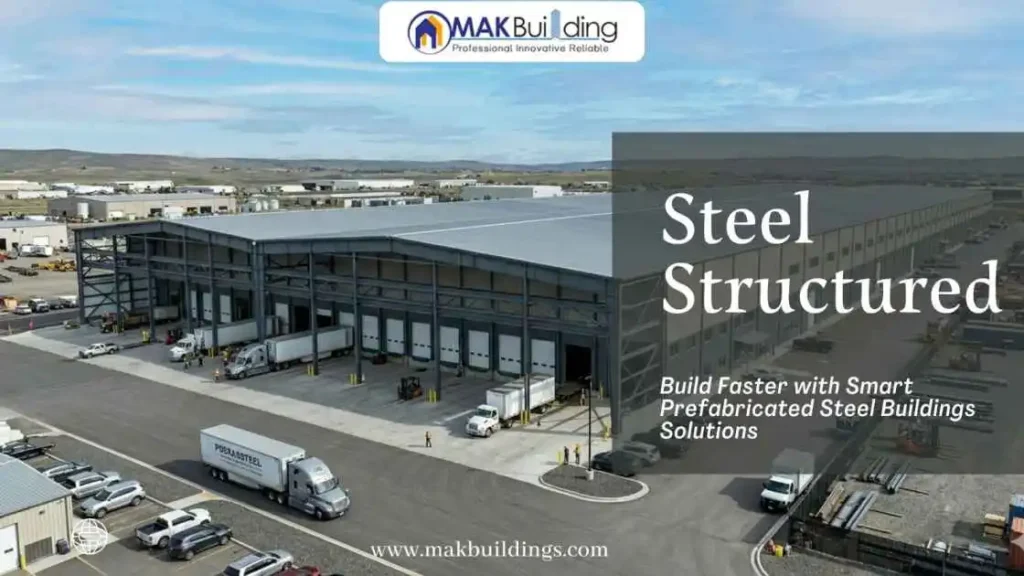
The construction industry is evolving rapidly, and businesses today are constantly searching for faster, cost-effective, and sustainable building solutions. In this transformation, steel structured buildings are emerging as a strong competitor to traditional construction methods. But the real question is—which one truly wins in 2026?
In this blog, we compare both construction methods and explain why companies like MAK Building System are leading the shift toward modern steel solutions.
What Are Steel Structured Buildings?
Steel structured buildings are modern constructions made primarily using steel frameworks. These include steel frame buildings, steel prefab buildings, and prefabricated steel buildings that are designed off-site and assembled on-site. After the high level of engineering and accurate production, there are qualified companies such as MAK Building System that provide individualized answers to industrial, commercial and infrastructural endeavors utilizing pre engineered steel buildings.What Are Traditional Buildings?
Common materials used to construct traditional buildings include bricks, cement, concrete and wood. They are constructed on-site and have been the mainstay of construction over decades. Nonetheless, they have longer schedules, more reliant on labor, and are more material-wasting than contemporary steel constructions.Key Comparison: Steel Structured vs Traditional Buildings
We will discuss the comparisons of the two methods of construction on crucial aspects:-
Construction Speed
- Steel Structured Buildings: Pre-engineered components allow fast assembly, reducing project timelines significantly.
- Traditional Buildings: Require step-by-step on-site construction, leading to delays.
-
Cost Efficiency
- Steel Structured Buildings: Lower labor costs, minimal waste, and reduced construction time help save money.
- Traditional Buildings: Higher labor costs and longer timelines increase expenses.
-
Strength and Durability
- Steel Structured Buildings: Fireproof, pestproof and weatherproof. Steel has a lifespan of decades.
- Traditional Buildings: Vulnerable to cracks, moisture damage, and termite issues.
- Design Flexibility
- Steel Structured Buildings: Offer large open spaces, flexible layouts, and easy expansion options.
- Traditional Buildings: Limited by load-bearing walls and structural constraints.
-
Sustainability and Environmental Impact
- Steel Structured Buildings: Steel is recyclable, and prefabrication reduces construction waste.
- Traditional Buildings: Higher resource consumption and more waste generation.
-
Maintenance Requirements
- Steel Structured Buildings: Require minimal upkeep due to their durability.
- Traditional Buildings: Need frequent repairs and maintenance over time.
-
Safety and Reliability
- Steel Structured Buildings: Engineered for high safety, including earthquake resistance.
- Traditional Buildings: Depend heavily on workmanship and material quality.
Applications in 2026
Steel structured buildings are widely used across industries:- Warehouses and logistics hubs
- Commercial buildings
- Industrial plants
- Agricultural storage
- Modular offices
Challenges of Steel Structured Buildings
Although steel buildings have various advantages, some of the considerations include:- Accurate design and planning required
- Need for skilled installation teams
- Proper insulation planning
Are Traditional Buildings Still Relevant?
The traditional construction is still valuable in:- Residential housing
- Heritage and aesthetic projects
- Small-scale construction
Why Businesses Are Choosing Steel in 2026
Businesses today prioritize:- Faster completion
- Cost savings
- Sustainability
- Long-term durability